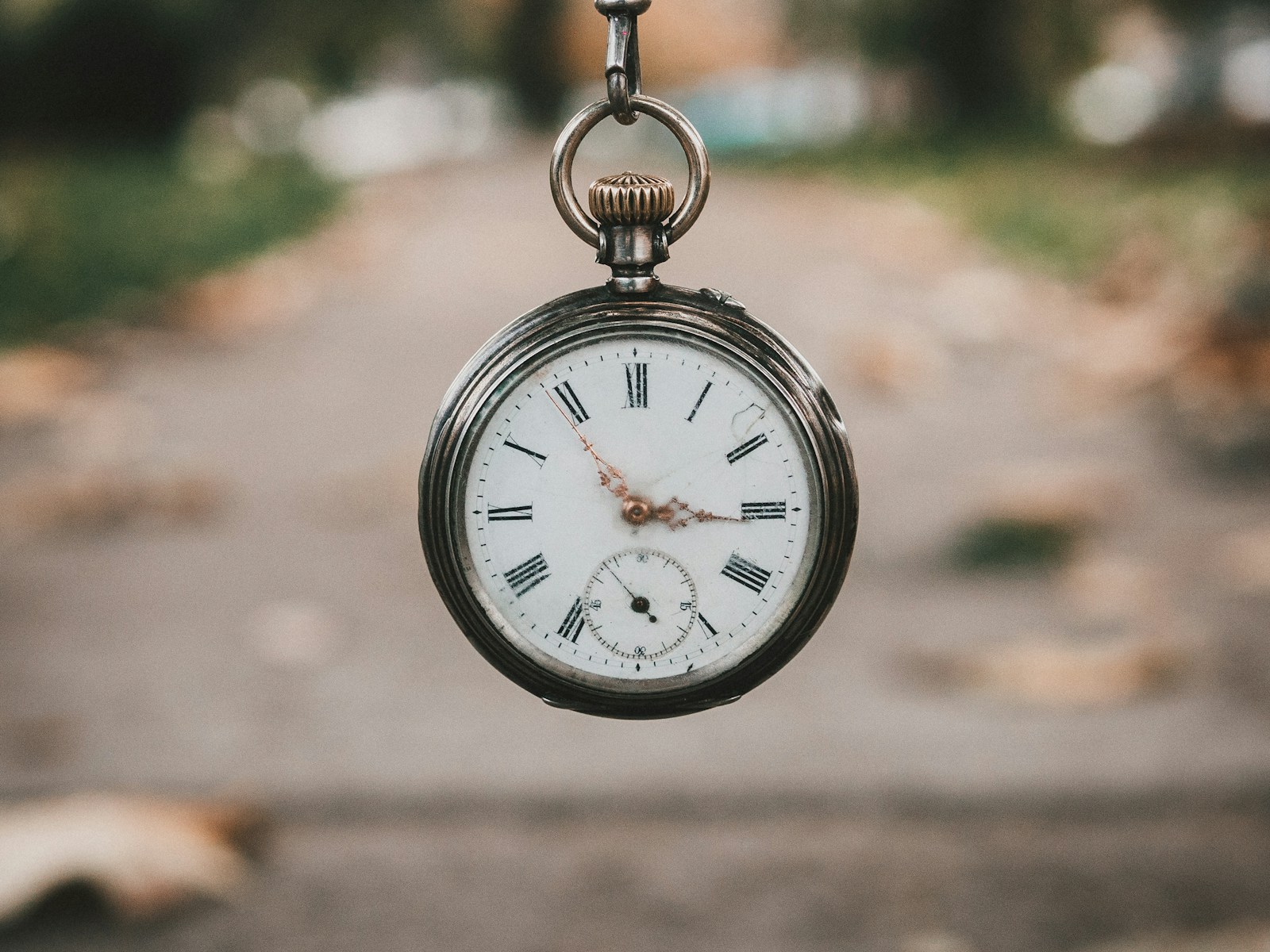
I own three pocket watches. Two of them work. The third, an heirloom of dubious provenance and unknown manufacture, is kept in a small leather case in the drawer of my office desk, and I take it out, occasionally, when I want to be reminded of something I cannot quite name.
I have, in my four years on the Standards Committee, grown increasingly convinced that the pocket watch is one of those objects whose retirement was announced a hundred years too early, and which is now ready, on the strength of accumulated evidence about how we live and how we would prefer to live, for a modest revival.
A required gesture
To check the time on a pocket watch, one must reach for it, draw it out, click it open, look at it, and return it. The gesture is, by modern standards, slow. It cannot be performed at a meeting without being noticed. It cannot be performed in a conversation without acknowledging that one is performing it. The pocket watch makes its user accountable for the act of checking the time in a way that the wristwatch and the phone do not.
This is, in my view, a feature. The decision to check the time is, after all, a meaningful decision. It implies that one is considering whether to remain where one is, or to move on. The pocket watch demands that this decision be made with one's whole self.
Not a smartphone
The decision to wear a pocket watch is, in our current moment, a decision to introduce one piece of high-quality, single-purpose technology into one's daily life. It is a decision to have, in one's pocket, an object that does one thing and does it without notification, without battery anxiety, without software updates.
I do not, I should clarify, advocate for the abandonment of the smartphone. I own one. I use it. But I have come to believe that the regular handling of an object whose only function is to tell the time is, for the user, a small and salutary corrective.
An invitation to care
A pocket watch must be wound. A pocket watch must, on occasion, be serviced. A pocket watch will, if treated well, outlast its current owner by a margin of several decades, and may be passed to a son, a daughter, or an unspecified relative many generations removed.
This relationship to time and inheritance is one that very few objects in the modern home now provide. The pocket watch is, in a quiet way, a contradiction of the entire premise on which most of our daily objects are now manufactured. And it is, for that reason, worth carrying.
I propose only that those associates who have, at some point in the past, considered acquiring a pocket watch and have set the consideration aside, take the consideration up again. The object will not change your life. It will, however, change one small ritual within your life, and over time, the change will be a pleasant one.